
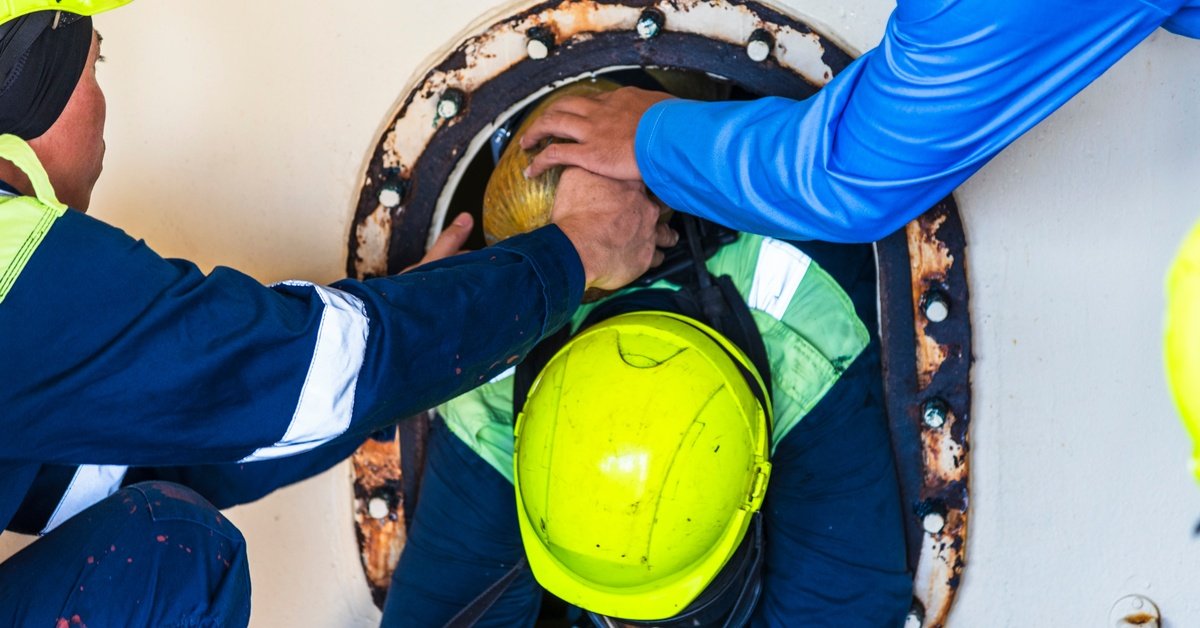
Enclosed spaces don’t usually look dangerous. A storage tank, a crawl space, a ship compartment, or even a poorly ventilated basement can seem harmless at first glance. But these environments can quickly become life-threatening—often without warning. Understanding enclosed space hazards early is the first step toward staying safe.
What Counts as an Enclosed Space?
An enclosed space is any area with limited entry or exit points, restricted airflow, and conditions not suitable for continuous occupancy. These spaces appear across industries and everyday environments alike—from industrial silos to utility vaults and marine compartments. Since designers never intended these spaces for regular human presence, hazards can develop unnoticed.
The Silent Threat: Oxygen Deficiency
Oxygen depletion ranks as one of the most dangerous threats in enclosed spaces. Normal air contains about 21% oxygen, but levels can drop rapidly due to rusting metal, chemical reactions, or displacement by other gases.
Even a small decrease can impair judgment. Severe drops can lead to unconsciousness in seconds. The danger is especially serious because oxygen deficiency has no smell, no color, and no immediate warning signs.
Toxic and Flammable Gases
Beyond oxygen levels, enclosed environments can trap hazardous gases such as carbon monoxide, hydrogen sulfide, or methane. These gases may originate from machinery, decomposition, or industrial processes.
Some are toxic. Others are explosive. Many are both.
Without proper detection equipment, individuals entering these spaces may not realize the danger until symptoms—like dizziness, confusion, or nausea—set in. By then, it may already be too late.
Why Accidents Often Escalate
Enclosed space incidents often affect multiple people. This happens when someone enters to help a distressed individual without understanding the original hazard. Instead of one victim, the situation escalates. This is why training and protocol matter more than instinct in these environments.
Real-World Risk: Land and Sea
While enclosed space hazards exist in homes and workplaces, they are particularly critical in industrial and marine settings. Ships, for example, contain numerous confined compartments with limited ventilation, and conditions can change rapidly. Therefore, unique risks at sea demand specialized safety approaches.
Staying Safe
Preventing accidents starts with awareness. Proper ventilation, atmospheric testing, and adherence to safety procedures can significantly reduce risk. Training is equally essential. Knowing when not to enter a space is just as important as knowing how to do so safely.
Ultimately, enclosed spaces are dangerous precisely because they are easy to underestimate. Recognizing the risks—and respecting them—can make the difference between routine work and a preventable tragedy.