
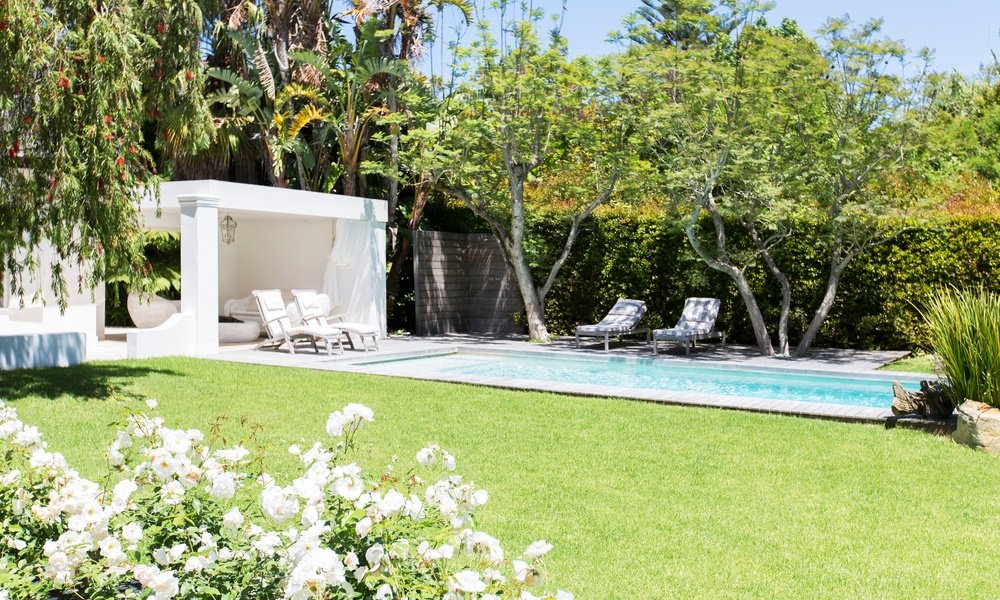
A well-designed backyard feels easy to move through and pleasant to look at, even when it contains several different features. Patios, gardens, seating areas, pools, walkways, and lawns serve different purposes without making properties feel divided into unrelated sections.
Creating better visual flow in your backyard comes down to establishing connections between those features. Lines, materials, colors, plants, and sightlines guide the eye from one part of the property to another. The result is an outdoor space that feels intentional rather than assembled one improvement at a time.
Start With the View From the House
Backyard planning often focuses on what the space looks like once someone is already outside. However, some of the most important views begin indoors.
Look through the windows and doors that face the yard. What catches the eye first? A garden, mature tree, pool, sculpture, or attractive seating area can become a natural focal point. Less attractive necessities, such as utility equipment and storage areas, may be better positioned away from major sightlines or screened with landscaping.
This approach connects indoor and outdoor areas visually. A dining room overlooking a garden, for example, can feel related to the landscape even when the doors are closed.
Give the Eye a Clear Path To Follow
Lines have a major influence on how people perceive a landscape. Straight paths create a direct, orderly appearance, while curves encourage the eye to travel more gradually through the yard. Neither approach is automatically better; the important part is consistency.
A geometric home may look balanced with a rectangular patio, straight planting beds, and direct walkways. A garden dominated by informal planting and natural shapes may benefit from softer edges and gently curving paths.
Swimming pools demonstrate the same principle particularly well. A rectangular pool establishes strong horizontal and vertical lines, while freeform pool shapes are appealing because they use curves to visually connect water with gardens, patios, existing trees, and other natural landscape features.
Repeat Materials Instead of Constantly Introducing New Ones
Variety can make a backyard interesting, but too many unrelated materials make the space visually busy. Repetition creates continuity.
If a patio uses warm-toned stone, for instance, that material or a similar color could appear again in walkway borders, retaining walls, steps, or a fire-pit surround. A particular wood tone used for a deck might reappear in a pergola or privacy screen.
The materials do not have to match exactly; they simply need enough similarities in color, texture, or character to look as though they belong to the same overall design. This principle also makes additions feel less disconnected from older parts of a property.
Use Plants To Connect Different Zones
Plants are particularly useful for tying separate outdoor areas together because they can repeat without making a landscape look overly uniform. Consider choosing several foundational plants and using them in multiple locations. The same ornamental grass could appear beside a patio and again near the back fence. A flowering shrub used near the house might also mark the entrance to a garden path.
Repeating colors can have a similar effect. If purple flowers appear throughout several planting beds, the eye naturally notices the relationship between them.
Plant height matters as well. Gradual transitions from low groundcovers to medium shrubs and taller trees generally produce smoother visual movement than abrupt changes in scale.
Create Distinct Zones
Large backyards often work best when divided according to function. There might be one area for dining, another for conversation, an open section for games, and a quieter corner for reading or relaxing. These zones should feel distinct without becoming isolated.
Instead of placing hard barriers between every activity area, consider subtle transitions. Changes in paving patterns, strategically positioned plants, outdoor rugs, lighting, or a few steps can communicate that someone has entered a different zone without completely interrupting the view. Pathways reinforce those relationships by providing an obvious connection between spaces.
Make Transitions Feel Intentional
Some of the most awkward areas in a backyard occur where two surfaces or features meet. Lawn may stop abruptly at a patio, a walkway might run directly into a planting bed, or a deck could feel disconnected from the garden below it. Transitions deserve as much consideration as focal points.
Border plantings soften the line between hard paving and lawn. Steps connect spaces at different elevations. Gravel, stone edging, or groundcover can create a visual bridge between two materials. Curved planting beds also soften rigid hardscaping, while structured borders bring definition to a particularly informal garden.
Use Lighting To Preserve Flow After Dark
Visual flow should not disappear when the sun goes down. Outdoor lighting can reveal the same relationships that are obvious during daylight.
Rather than illuminating every feature equally, create a sequence. Path lights establish direction, subtle uplighting emphasizes trees or architectural elements, and softer illumination identifies seating and dining areas. Avoid creating isolated pools of extremely bright light surrounded by darkness; a layered approach generally makes it easier to understand the layout of the yard and move through it comfortably.
Lighting can also change which elements become focal points. A tree that blends into the background during the afternoon might become the dominant visual feature at night when its trunk and canopy are softly illuminated.
Remove Elements That Interrupt the Design
Improving a backyard does not always require adding something. Removing or relocating distracting elements can sometimes have a greater effect.
Unused furniture, excessive decorations, empty containers, visible hoses, and miscellaneous storage interrupt otherwise clean sightlines. Even healthy landscaping may need occasional adjustments if shrubs have grown large enough to hide important views or make paths feel cramped. Periodically viewing the backyard from several locations—including from inside the home—can make these interruptions easier to notice.
Let the Whole Yard Share a Visual Language
There is no single formula for creating better visual flow in your backyard. A highly structured landscape and an informal garden can both feel cohesive when their individual elements relate to one another.
Instead of evaluating every patio, plant, pathway, or feature independently, consider what connects it to everything around it. Repeated materials, thoughtful sightlines, proportional features, consistent shapes, and gradual transitions give the eye reasons to keep moving through the landscape. When those relationships are clear, even a backyard with several distinct activity areas can feel like one complete outdoor space.